 Medovia Medical
Medovia Medical
Medovia Medical
When considering the advancement in medical imaging, a common question arises: "What is the difference between digital and analog X-ray machines?" Dr. Sarah Wong, a radiology expert at the Medical Imaging Association, emphasizes the significance of this distinction. She states, "Understanding these differences can significantly impact patient care and diagnostic efficiency."
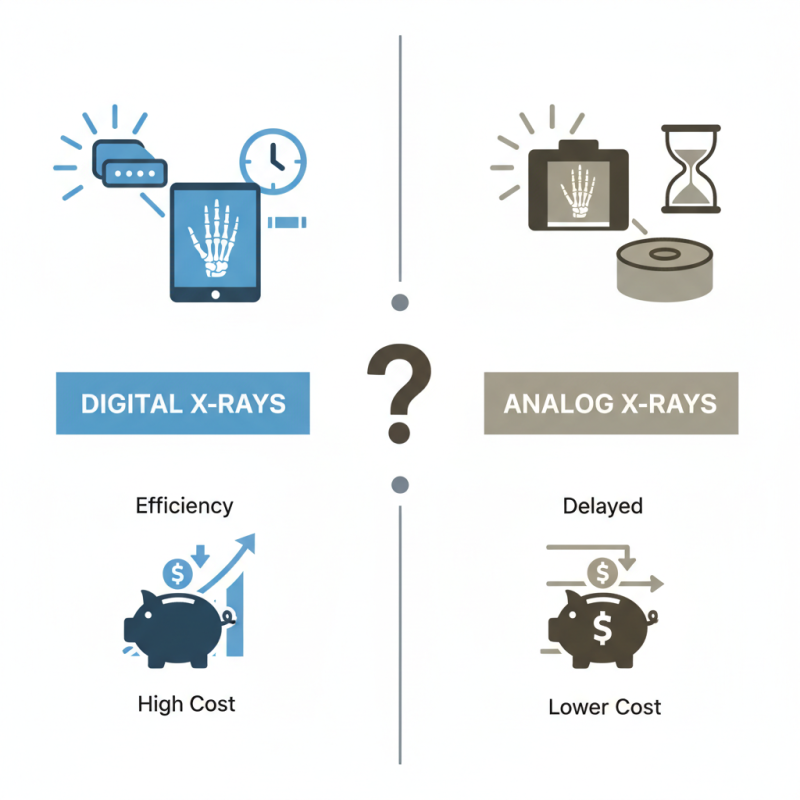
Digital X-rays utilize sensors that convert X-rays into electronic signals quickly. This process leads to immediate image availability, enhancing fast decision-making in critical situations. In contrast, analog X-rays involve film that requires development time. The waiting period can delay necessary treatments, highlighting a clear gap in efficiency.
Despite the benefits of digital systems, there are challenges that must be examined. Transitioning to digital can be costly for some facilities, and the learning curve may hinder immediate gains. Furthermore, not all diagnoses benefit equally from digital technology. Each method has its pros and cons, reflecting the complexity behind "What is the difference between digital and analog X-ray machines?" This ongoing debate continues to shape the future of radiology as we strive for improved patient outcomes.
X-ray technology has evolved significantly over the years. At its core, X-ray machines are crucial for medical imaging. They help detect various conditions, from fractures to cancers. The two main types of X-ray machines are digital and analog, each with its characteristics.
Digital X-ray machines use electronic sensors to capture images. This process produces higher quality images in a shorter time. These machines allow for more flexibility in image processing. Radiologists can enhance images to aid in diagnosis. On the other hand, analog machines use film. They require chemical processing, which takes longer. The images are also less consistent and may show lower detail.
Tip: Regular maintenance of X-ray machines is essential. This can improve image quality and prolong equipment lifespan.
Both systems have their pros and cons. While digital systems offer speed and convenience, they can be costly. Analog machines are cheaper, yet the workflow is slower. It’s vital to assess your facility's needs before choosing.
Tip: Consider training for staff on both systems. This ensures effective use and maximizes the value of the technology. Understanding both types can also enhance diagnostic capabilities.
| Feature | Digital X-ray Machines | Analog X-ray Machines |
|---|---|---|
| Image Quality | High resolution with enhanced clarity | Standard resolution, may lack detail |
| Processing Time | Instant image processing | Longer processing with film development |
| Storage and Accessibility | Digital storage with easy access | Physical storage using films |
| Radiation Dose | Lower radiation exposure | Higher radiation exposure |
| Cost | Higher initial investment but lower long-term costs | Lower initial cost but ongoing film costs |
| Environmental Impact | Less environmental waste | Chemical waste from film development |
: X-ray technology is essential for medical imaging, detecting conditions like fractures and cancers.
The two main types are digital and analog X-ray machines. Each has unique features.
Digital machines use electronic sensors for images, providing higher quality and faster results compared to analog machines.
Digital X-ray machines reduce radiation exposure and allow for immediate analysis. They improve patient care significantly.
High initial costs and the need for advanced software can deter facilities from upgrading to digital systems.
Analog machines are more affordable and easier to operate, making them suitable for routine screenings in some clinics.
Regular maintenance is crucial for improving image quality and extending the lifespan of the equipment.
Staff training ensures effective usage and maximizes the value of both digital and analog X-ray systems.
Digital X-ray machines offer faster image processing, allowing for quicker diagnoses compared to analog machines.
They should assess image quality, system compatibility, costs, and necessary staff training for effective operation.
The article "Difference Between Digital and Analog X-ray Machines Explained?" provides a comprehensive overview of X-ray technology and its two primary types: analog and digital. It begins by outlining the fundamental principles of X-ray technology before delving into the specific characteristics of analog X-ray machines, which typically involve film-based imaging and a longer processing time. In contrast, digital X-ray machines utilize electronic sensors to capture images instantly, allowing for enhanced image processing and easier storage.
The comparison of image quality reveals that digital X-rays generally offer superior clarity and detail, facilitating better diagnostic capabilities. However, the article also discusses the advantages and disadvantages of each type, highlighting that while digital X-rays have a higher initial cost and require specific technology, analog X-rays may be viewed as more straightforward and cost-effective in certain scenarios. Ultimately, what is the difference between digital and analog X-ray machines? It lies in image acquisition methods, processing time, and overall efficiency, which significantly impact their application in medical settings.
