 Medovia Medical
Medovia Medical
Medovia Medical
How to dispose of expired or broken lab devices safely? The answer begins before disposal. A device may look inactive, yet retain chemical residues, contaminated surfaces, pressurized parts, batteries, mercury lamps, or stored data. Treat every item as potentially unsafe until a trained professional completes an assessment.
The Global E-waste Monitor 2024 reported 62 million tonnes of electronic waste worldwide in 2022. Only 22.3% was formally collected and recycled. Laboratory equipment adds complexity because it may combine electronics with hazardous materials and specialized components. The World Health Organization’s Laboratory Biosafety Manual, fourth edition, recommends risk assessment, decontamination, clear labeling, and controlled waste handling. These steps remain practical, even when equipment seems obsolete.
James A. Kaufman, founder of the Laboratory Safety Institute, stated, “Safety is not a priority because priorities change; safety is a value.” That principle matters when a failed centrifuge sits beside an exit, or an expired analyzer collects dust in storage. Isolating the equipment, recording its condition, and contacting an authorized waste contractor can prevent avoidable exposure and environmental harm. Never place unknown laboratory devices in ordinary recycling or general waste.
Small details matter. Disconnect power. Secure loose parts. Preserve service records. Confirm decontamination requirements. A label can be missed. A rushed handoff can fail. Therefore, this guide explains how to identify risks, document decisions, and choose a compliant disposal route. It also recognizes an uncomfortable reality: no checklist is perfect, and unclear equipment histories require cautious professional review.
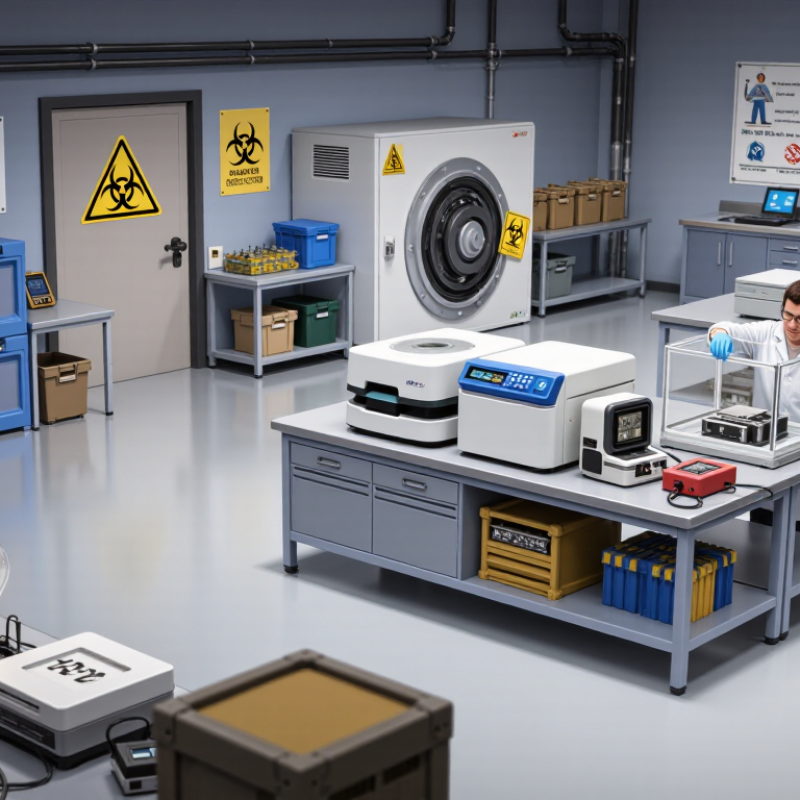
A broken centrifuge is not automatically ordinary scrap. Before moving it, identify its hazards and disposal requirements. Check the equipment label, service history, safety data sheets, and decontamination records. Look for chemical residues, sharps, damaged batteries, mercury switches, refrigerants, compressed gases, or radioactive components.
In practice, appearance can mislead. A clean microscope may still contain contaminated parts. A cracked analyzer may release residues when dismantled. The World Health Organization reports that about 15% of healthcare waste is hazardous, including chemical, infectious, and radioactive materials. This figure supports a cautious assessment, even for small laboratories. Separate contaminated components from ordinary electrical waste. Record who inspected the equipment and what hazards were found.
Electronic disposal also deserves attention. The Global E-waste Monitor 2024 reported 62 billion kilograms of electronic waste generated worldwide in 2022, while only 22.3% was formally collected and recycled. Laboratory equipment should go through an approved waste contractor when it contains hazardous materials or complex electronics. Confirm whether the contractor accepts batteries, lamps, cooling units, or contaminated metal. Never assume a general recycler can process everything. That assumption fails too often.
Use gloves, eye protection, and suitable containment during inspection. Do not dismantle sealed systems without trained personnel. If contamination is uncertain, stop handling and request an institutional safety review. Keep photographs, serial details, hazard findings, and transfer records together. Small documentation gaps can create large disposal problems.
Use this table as a preliminary screening guide. Confirm the applicable waste classification, transport rules, and disposal route with your organization’s EHS officer and local regulatory authority before disposal.
| Equipment or Waste Type | Typical Hazards | Risk Level | Identification Checks | Immediate Preparation | Recommended Disposal Route | Required Records |
|---|---|---|---|---|---|---|
| Sharps, Needles, and Blades | Puncture injuries; possible biological, chemical, or pharmaceutical contamination. | High | Check whether the item contacted specimens, cultures, blood, chemicals, or drugs. | Do not recap, bend, break, or manually remove needles. Place immediately in a rigid, puncture-resistant sharps container. | Use an approved sharps or biohazard waste contractor, depending on contamination. Never place sharps in general waste or recycling. | Waste label, accumulation date, transfer or collection record. |
| Broken Glassware | Cuts and punctures; contamination from chemicals, biological materials, or radioactive substances. | Medium | Determine whether the glass is contaminated and whether it contains residues or pressurized components. | Use tongs, forceps, or a brush and dustpan. Place in a rigid, closable, puncture-resistant container; do not use thin plastic bags. | Contaminated glass follows the applicable hazardous, biohazard, or radioactive waste route. Clean uncontaminated glass may be recyclable only where accepted. | Container label and contamination status. |
| Expired Chemical Reagents | Toxicity, corrosivity, flammability, reactivity, peroxide formation, or unknown chemical incompatibility. | High | Review the original label, safety data sheet, expiration date, storage history, and signs of crystals, discoloration, leaks, or pressure. | Keep in the original container when sound. Do not mix chemicals or open containers showing pressure, crystallization, or severe deterioration. Isolate incompatible materials. | Arrange collection as hazardous chemical waste through an authorized waste service. Some peroxide-forming chemicals require specialist assessment before movement. | Inventory entry, safety data sheet, waste profile, manifest or transfer record. |
| Empty or Residual Chemical Containers | Residual vapors, toxic residues, flammable atmospheres, and incompatible chemical traces. | Medium | Confirm the former contents and whether the container is genuinely empty and free of hazardous residue. | Do not rinse unless the approved procedure permits it. Keep caps secured and label the container with its former contents and contamination status. | Manage as hazardous waste unless formally decontaminated under an approved procedure. Do not place unknown chemical containers in recycling. | Decontamination record or hazardous waste transfer record. |
| Mercury Thermometers, Switches, or Instruments | Mercury exposure from vapor or spills; environmental contamination. | High | Check for visible liquid metal, damaged housings, and labels indicating mercury or mercury compounds. | Do not use a vacuum cleaner, broom, or ordinary mop. Isolate the area and place intact items in a sealed, compatible secondary container. | Send to a hazardous waste or mercury recovery service. Mercury-contaminated debris requires specialized spill-waste handling. | Equipment inventory, incident record if damaged, waste transfer documentation. |
| Lead, Cadmium, or Other Heavy-Metal Components | Toxic metal exposure and environmental contamination from dust, coatings, or residues. | High | Review labels, material declarations, equipment history, and visible coatings or solder containing regulated metals. | Prevent dust generation. Keep components intact where possible and package them to prevent breakage or leakage. | Use hazardous waste or regulated electronic-waste recycling channels that accept heavy-metal components. | Material identification and recycler or waste contractor record. |
| Rechargeable Batteries and Battery Packs | Fire, thermal runaway, short circuit, leakage, and chemical burns; lithium batteries may ignite when damaged. | High | Identify battery chemistry and check for swelling, puncture, heat, corrosion, leakage, or deformation. | Do not charge or use damaged batteries. Prevent terminals from contacting metal using non-conductive tape or individual packaging. Isolate swollen or hot batteries. | Send through an approved battery recycling or hazardous-waste route. Damaged lithium batteries require specialized packaging and transport controls. | Battery type, condition, quantity, and transfer record. |
| Electrical and Electronic Equipment | Electric shock, stored energy, fire, hazardous components, and data or sample confidentiality risks. | Medium | Check for capacitors, batteries, lamps, refrigerants, oils, mercury switches, and contamination from laboratory use. | Disconnect power and allow stored energy to be safely discharged by qualified personnel. Remove hazardous attachments only under an approved procedure. Wipe or decontaminate where appropriate. | Use an authorized electronic-waste recycler. Separate batteries, lamps, mercury parts, and contaminated components before shipment. | Decontamination certificate, asset disposition record, data-wiping record if applicable. |
| UV Lamps, Mercury Lamps, and Other Specialty Lamps | Ultraviolet exposure, broken-glass injury, mercury release, and electrical hazards. | High | Identify lamp type and determine whether it contains mercury or other regulated substances. | Disconnect power before removal. Keep lamps intact in protective packaging; do not crush or place them in general waste. | Use a lamp-recycling or hazardous-waste service authorized to manage mercury-containing lamps. | Lamp type, quantity, packaging, and collection record. |
| Compressed-Gas Cylinders and Gas Regulators | High pressure, projectile risk, oxygen enrichment, flammability, toxicity, and asphyxiation. | High | Read the cylinder label, valve condition, pressure status, gas classification, and ownership or return requirements. | Do not vent, puncture, cut, or dispose of cylinders as scrap. Secure upright with the valve protected and keep incompatible gases separated. | Return reusable cylinders to the supplier or send unwanted cylinders to a qualified gas-cylinder service. Toxic or reactive gases require specialist handling. | Cylinder identification, condition, chain-of-custody or return record. |
| Vacuum Pumps and Oil-Containing Equipment | Contaminated oil, chemical vapors, stored vacuum energy, and possible solvent or toxic residues. | Medium | Review the pumped substances, oil condition, filters, traps, and potential biological or radioactive contamination. | Isolate from power. Drain oil only under an approved procedure into a compatible, labeled container. Cap ports and secure loose parts. | Manage used oil and contaminated filters as regulated waste when applicable. Send the equipment to an authorized equipment or electronic-waste recycler. | Decontamination record, used-oil record, equipment disposal record. |
| Biological Safety Cabinets and Incubators | Biological contamination, aerosols, sharps, chemical residues, and potentially contaminated filters. | High | Review the last materials handled, decontamination requirements, HEPA filter condition, and any attached gas or vacuum lines. | Stop use and restrict access. Arrange validated decontamination by qualified personnel before dismantling, moving, or recycling. | After documented decontamination, send to an approved equipment recycler or general disposal route as permitted. Filters may require separate treatment. | Decontamination certificate, filter disposition record, asset record. |
| Radioactive-Use Equipment or Contaminated Components | External or internal radiation exposure and radioactive contamination. | High | Check radiation labels, isotope history, contamination surveys, shielding materials, and records from the radiation-safety program. | Do not dismantle, move, or discard without authorization from the designated radiation-safety professional. Maintain shielding and access controls. | Release only after an authorized survey and documented clearance. Otherwise use a licensed radioactive-waste or specialized decommissioning route. | Radiation survey, clearance certificate, inventory and transfer documentation. |
| Refrigerators, Freezers, and Chillers | Refrigerants, oils, electrical energy, biological or chemical residues, and stored samples. | Medium | Check refrigerant type, compressor condition, stored contents, temperature history, and contamination status. | Remove and manage samples separately. Disconnect power safely, defrost where permitted, and decontaminate internal surfaces. | Use an appliance or electronic-waste recycler qualified to recover refrigerants. Do not release refrigerant or abandon the unit. | Sample transfer record, decontamination record, refrigerant recovery record. |
| Autoclaves and Sterilization Equipment | Steam pressure, heat, electrical energy, biological residues, and possible chemical sterilant residues. | High | Check pressure-vessel condition, last maintenance date, chamber contents, and any chemical or biological contamination. | Shut down, isolate energy sources, and allow the vessel to cool and depressurize. Decontaminate the chamber before dismantling. | Use qualified service or equipment-disposal personnel. Pressure vessels may require controlled decommissioning before recycling. | Decontamination, maintenance, and decommissioning records. |
| Unknown or Unlabeled Equipment and Containers | Unknown chemical, biological, radioactive, pressure, electrical, or mechanical hazards. | High | Do not rely on appearance. Investigate inventory records, labels, users, storage location, and historical processes. | Do not open, test, dismantle, mix, or move unnecessarily. Isolate and mark as “Unknown—Do Not Use” pending assessment. | Obtain an assessment from EHS or another qualified specialist before selecting a waste stream or contractor. | Assessment notes, photographs, inventory search, final classification, transfer record. |
Key rule: Treat any item with unknown contents, visible leakage, pressure, radiation labeling, biological contamination, or damaged lithium batteries as potentially hazardous. Do not place laboratory equipment in general waste until it has been assessed, decontaminated where required, and cleared for the selected disposal route.
Residue may remain inside tubing, joints, vents, or sealed spaces. Treat the equipment as contaminated until trained personnel confirm otherwise. A missing record does not prove safety.
Review labels, service history, and recently used materials. Check the last-use record carefully. Then consult the facility’s safety officer and written procedures.
Wear protection matched to the known hazard. Isolate power sources and secure loose parts. Use compatible secondary containment to control leaks.
Do not open sealed chambers or cut tubing casually. Hidden residue may spread through air, liquid, or damaged parts. Stop when the internal condition is unclear.
Use an approved method for the specific residue and surface. Apply it slowly and allow the required contact time. Never use heat, pressure, or reactive chemicals without confirmation.
Wipe from cleaner areas toward dirtier areas. Replace wipes frequently. Collect rinse water and disposable materials under local waste requirements.
Check seams, drains, filters, and inaccessible cavities. A clean-looking surface can hide residue in a trap. This is easy to miss.
Separate reusable, recyclable, and hazardous components. Remove batteries, lamps, cables, glass, and detachable metal parts. Keep reusable parts away from scrap.
Stop the transfer and request specialist assessment. Isolate the equipment in a compatible, closed container. Record the uncertainty clearly.
Record the method, date, responsible person, and remaining uncertainty. Attach a clear status label. Photographing the equipment before dismantling can prevent later confusion.
How to dispose of expired or broken lab devices safely? Start by identifying the equipment’s potential hazards, including chemical, biological, electrical, mechanical, or radiological risks, and determine the disposal requirements for each type. Before moving or transporting anything, decontaminate the equipment using procedures appropriate to its previous use, and allow it to dry or become safe to handle. Never dismantle a device until its hazards have been assessed and controlled.
Next, separate components that can be reused, recycled, or treated as hazardous waste. Place each item in suitable, secure packaging and add clear labels describing its contents, condition, and any remaining risks. Use authorized waste handlers or approved disposal facilities that are equipped to manage laboratory equipment safely. Finally, document the decontamination, transfer, and final disposal steps, including dates, responsible personnel, and destination. Careful planning reduces exposure risks, prevents accidental release of harmful materials, and supports a safer, more organized laboratory environment.
